
Glossometry, Glostrums and Glossograms
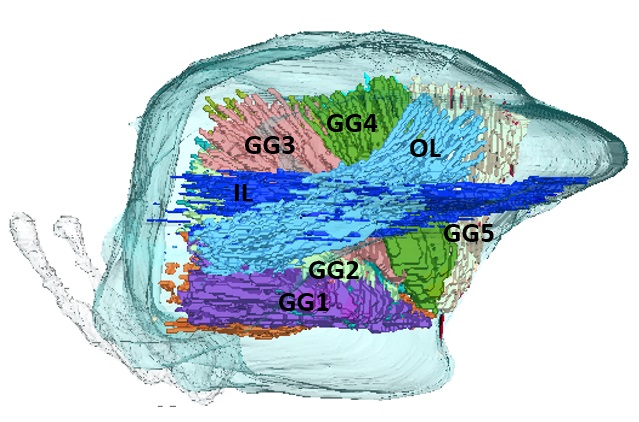

The top image shows the neuromuscular compartments of the tongue with five compartments of the genioglossus indicated GG1-5 [1]. The bottom image shows the glossometric distances from short tendon origin to 5 points along the tongue body surface contour. These are estimated from the ultrasound image using DeepLabCut pose information. Increase and decrease of the glossometric distance values correspond directly to the contraction and extension of the five neuromuscular compartments of the genioglossus which in turn correspond to motor commands.
Biomechanical modelling shows:
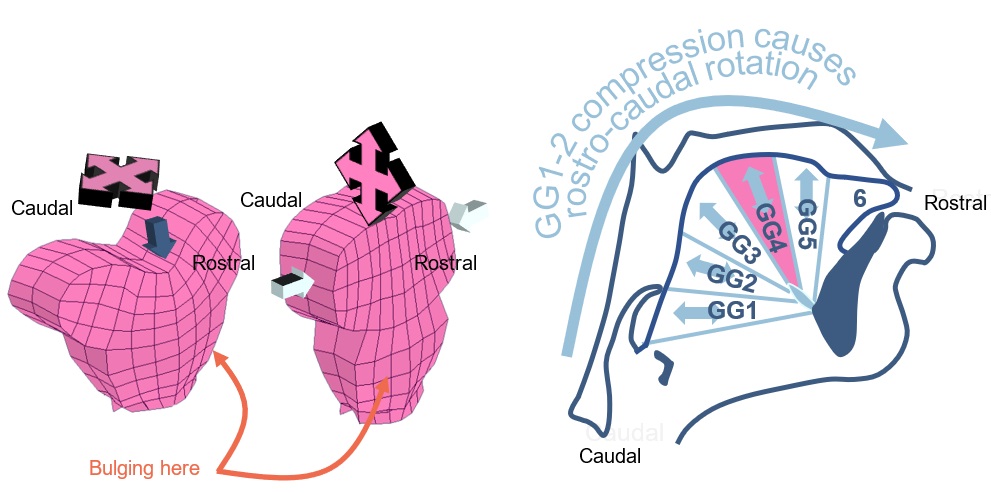
Biomechanical modelling shows contraction of genioglossus or transversus causes rostro-caudal expansion of a neuromuscular compartment which causes rotation about the short tendon attachment point.
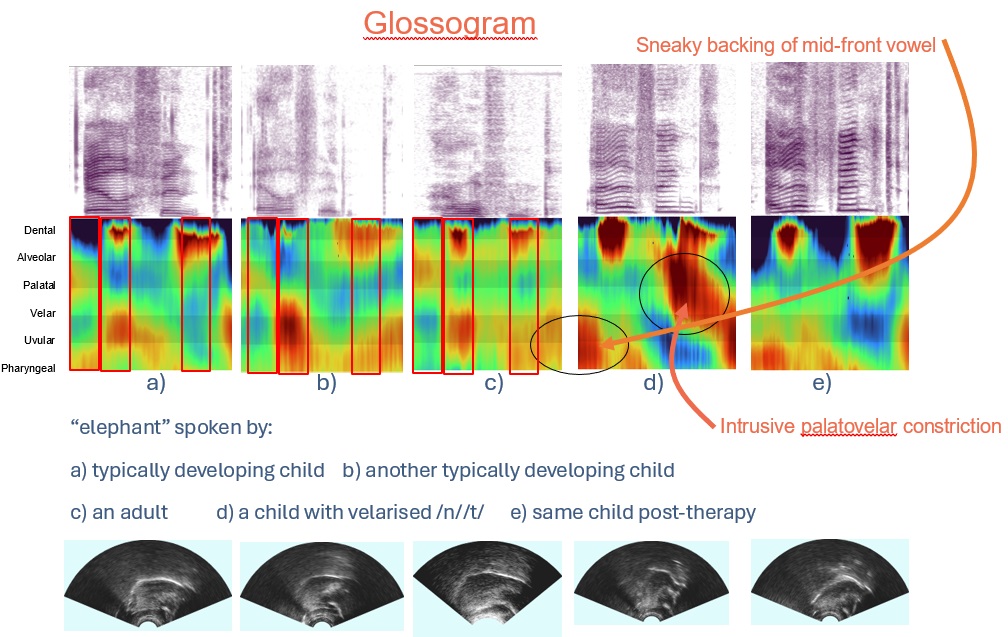
The Glosstrum represents the acoustic tube, derived from normalised distances (actual distances / mean distances) from the tongue surface.
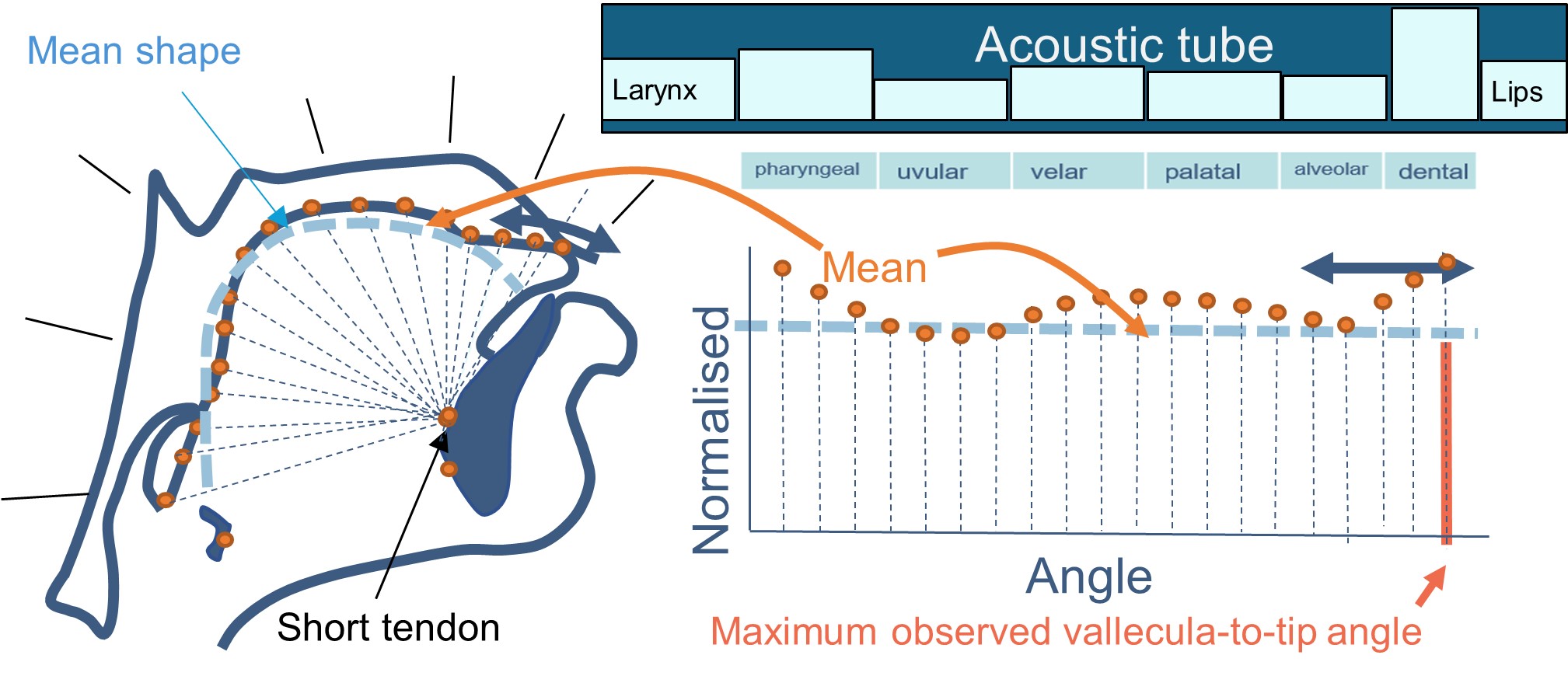
The Glosstrum can be thought of as an articulatory equivalent of the the acoustic spectrum. The Glossogram can be thought of as an articulatory equivalent of the acoustic spectrogram.
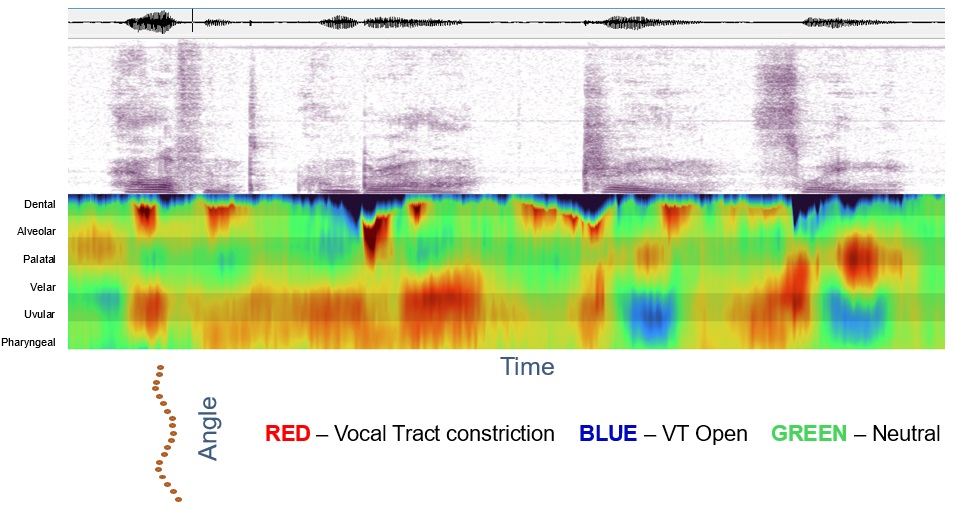
Glossogram shows shifts in place of articulation like a spectrogram shows shifts in formant frequencies.
The glossogram is automatically normalised so the pattern for an adult and a child looks the same.
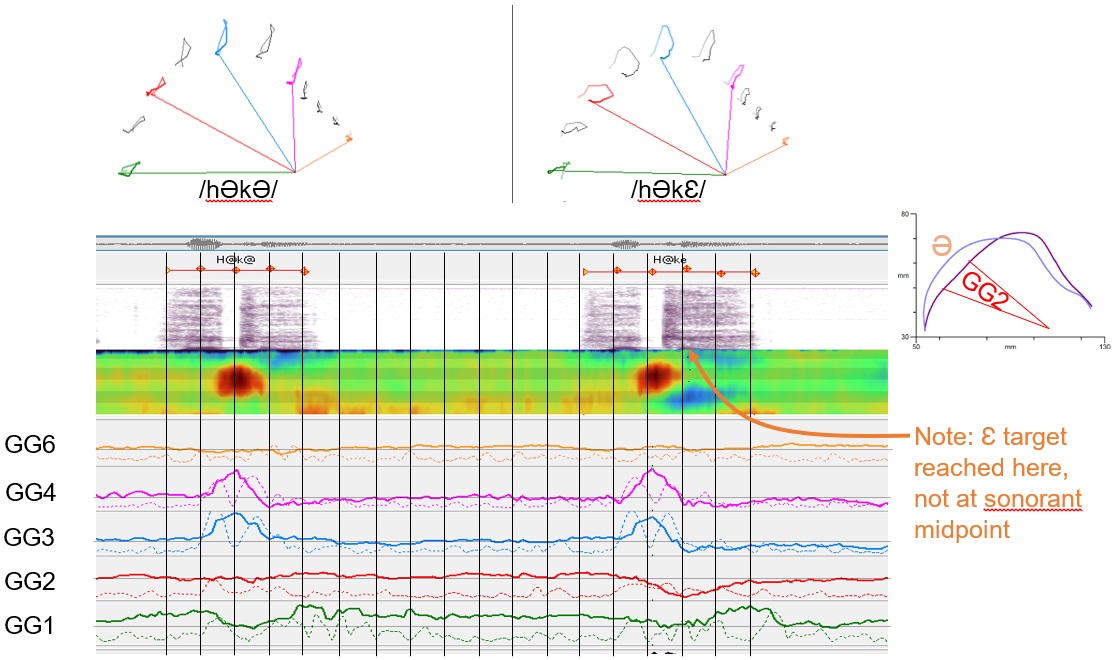
Tongue looping gesture explained using glossometric measures and rotation about the short tendon
In the example below there is no contraction of GG2 when the final vowel is a schwa but when the final vowel is a front vowel, GG2 contracts creating a wider back cavity but also causing forward rostro-caudal rotation. The forward rotation of the tongue body results in a looping pattern of tongue surface keypoints as the articulation proceeds hƏkƐ and settles back to Ə.
The timing of the hƏkƐ sequence is notable. GG2 compression for the Ɛ starts as the k closure starts and completes as the k release ends and voicing starts.
[1] Wrench, A. A. (2024). ‘The compartmental tongue’. Journal of Speech, Language, and Hearing Research, 67(10S), pp. 3887–3913. https://doi.org/10.1044/2024_JSLHR-23-00125.